Telehealth Psychiatry in Bristol, CT
Telehealth Psychiatry in Bristol, CT — Panic Disorder Care Without the Waiting Room
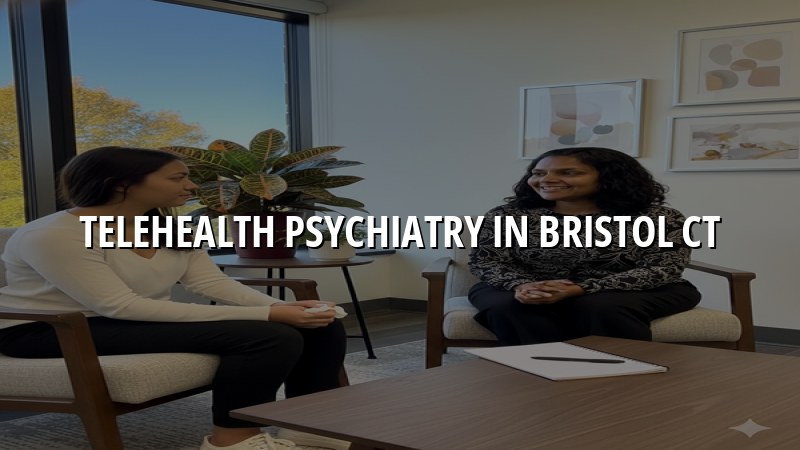
Here's an uncomfortable truth about panic disorder: seeking help for it often means putting yourself in exactly the kind of situation that triggers it. Driving somewhere new. Sitting in a medical waiting room — a place that's inherently associated with something being wrong — with strangers around you, fluorescent lights humming, waiting with no clear end in sight. For people managing panic disorder, that setup can kick off the very symptoms you're trying to get treated. Telehealth sidesteps the whole thing. You stay home. You sit on your couch, or in your bedroom, or wherever you feel most settled. The appointment starts on time. There's no waiting room. And the care is exactly the same — a full psychiatric evaluation, a real conversation, a real plan. Sindhia Shyras, APRN is a board-certified Psychiatric Nurse Practitioner with nine years of experience. She serves Bristol residents via telehealth and has worked with a lot of patients for whom the barrier to getting help was the process of getting help.
What Panic Disorder Actually Is — and Isn't
Panic attacks feel like emergencies. Heart pounding, chest tight, the absolute physical conviction that something is very wrong. The problem is, most people don't know the difference between a panic attack and a medical crisis the first time it happens — so the emergency room becomes part of the story. Panic disorder is the pattern that forms when panic attacks start recurring and you start organizing your life around avoiding the situations that might trigger them. That avoidance can spread. Places, activities, distances from home — the radius of what feels safe shrinks. Sindhia assesses for panic disorder and the anxiety conditions that often travel with it. She's interested in the pattern, not just the worst episode.
Treatment Options for Panic Disorder
Panic disorder responds well to both medication and therapy — and the combination tends to work better than either alone. SSRIs and SNRIs are first-line medications for panic disorder and are generally well-tolerated. Benzodiazepines are sometimes used short-term for acute symptoms but aren't typically a long-term solution. Cognitive behavioral therapy — specifically exposure-based approaches — is one of the most effective treatments available for panic. Sindhia will discuss what makes sense for your specific situation, including whether a referral for therapy alongside medication management would help. She won't prescribe something without explaining the reasoning. And if something isn't working, you tell her and she adjusts.
Agoraphobia and Telehealth
Agoraphobia — the fear of situations that might cause a panic attack, especially in places that feel hard to leave — often develops alongside panic disorder. For patients with significant agoraphobia, the idea of traveling to an office for a psychiatric appointment can feel genuinely impossible, not just inconvenient. Telehealth was made for this situation. You can access full psychiatric care — evaluation, medication management, ongoing support — without ever leaving home. As treatment works and the anxiety eases, the option for in-person visits at the Rocky Hill office is there if you want it.
Insurance and Access from Bristol
Bristol is about 25 minutes from the Rocky Hill office, but most Bristol patients do telehealth for the same reason anyone else does — it's easier, and easier means you actually keep your appointments. We accept Aetna, Cigna, Husky Health, Medicaid, United Healthcare, Anthem, ConnectiCare, and self-pay. Call 860-515-8689 to confirm your specific coverage before booking.
Frequently Asked Questions
Serving Bristol, CT and all of Connecticut via telehealth.
Call 860-515-8689 or book online below.
Book an Appointment