PTSD Psychiatrist in Cheshire, CT
PTSD Care in Cheshire, CT — Healing From What Happened Before You Had Words for It
Cheshire is a prosperous suburb — well-regarded schools, stable families, manicured neighborhoods. But childhood trauma doesn't only happen in places that look troubled from the outside. It happens in quiet houses on quiet streets, and it follows you into adulthood with a kind of dogged persistence that adult success can't quite shake loose. If you grew up in circumstances that weren't safe — emotionally, physically, or both — and you've been carrying that into your adult life in ways that confuse or exhaust you, you're not alone. Sindhia Shyras, APRN is a board-certified Psychiatric Nurse Practitioner who's spent nine-plus years helping adults work through the long shadow of early trauma. You can start getting real help right from Cheshire.
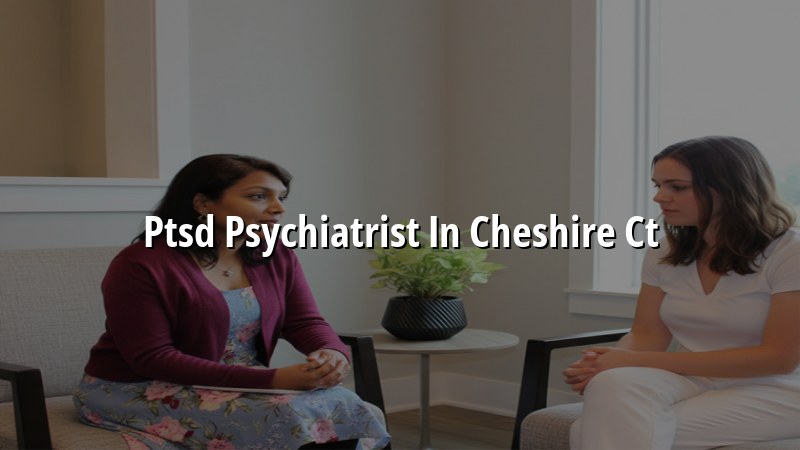
What Childhood Trauma Does Over Time
When trauma happens in childhood — whether it's abuse, neglect, a chaotic household, or witnessing something frightening — it shapes the nervous system during its development. That's different from trauma that happens in adulthood, and it tends to create a different pattern of symptoms. You might have trouble with emotional regulation — big reactions that feel out of proportion, or no reactions at all when something really matters. You might struggle to maintain relationships, or to feel truly safe with people even when you want to. You might have a nagging sense that something is wrong with you, when really something wrong happened to you. Complex PTSD — the term for trauma that's repeated or developmental — is a real clinical presentation, and it responds to the right treatment.
Medication Management for Complex Trauma
Medication isn't a cure for childhood trauma — nothing is, really, in any simple sense. But it can do something important: it can lower the baseline of reactivity that makes daily life feel so hard. SSRIs have good evidence for both PTSD and the depression that often accompanies it. Mood stabilizers are sometimes considered when emotional dysregulation is significant. The goal isn't to flatten your emotions — it's to create enough neurological stability that healing is actually possible, not just theoretical. Sindhia does a full psychiatric evaluation first — about an hour, real conversation — before recommending anything. She accepts Aetna, Cigna, Husky Health, Medicaid, United Healthcare, Anthem, ConnectiCare, and self-pay.
Supportive Therapy, Not Just Prescriptions
For complex and childhood PTSD, medication alone usually isn't the whole picture. Sindhia offers supportive therapy alongside medication management, which gives you a space to process what happened in an informed, clinically grounded way. She's not going to rush you or push you to go anywhere you're not ready to go. The pace is yours. And telehealth is available throughout Connecticut — including right from Cheshire — so you don't have to add a complicated commute to an already hard thing. Call 860-515-8689 or book online. No referral needed.
Frequently Asked Questions
Serving Cheshire, CT and all of Connecticut via telehealth.
Call 860-515-8689 or book online below.
Book an Appointment