Mood Disorder Treatment in Guilford, CT
Mood Disorder Psychiatrist in Guilford, CT — When You Look Fine and Feel Off
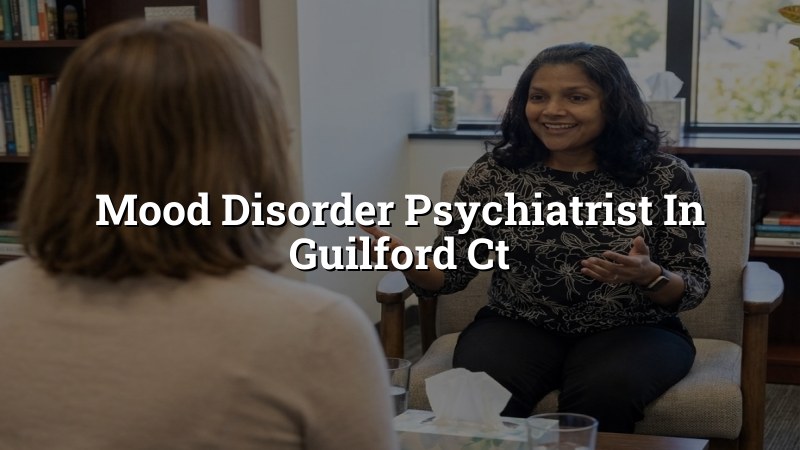
Guilford is the kind of town that attracts people who have things together — the historic green, the waterfront, the well-kept Victorians, the active and educated community. So if you're someone who's been quietly not fine for years while appearing completely fine, you probably know how that goes. Career intact. House maintained. Social obligations met. But internally, there's been a persistent flatness — a sense of going through the motions, a joy that's been dimmed down to something that barely registers, a tiredness that isn't about sleep. You've looked fine to everyone around you. Maybe even to yourself, in certain lights. And that's exactly what makes high-functioning mood disorder so hard to catch — and so exhausting to carry. Sindhia Shyras, APRN is a board-certified Psychiatric Nurse Practitioner with nine years of experience. She sees Guilford residents through telehealth anywhere in Connecticut and in-person at our Rocky Hill office.
The Invisible Cost of Holding It Together
Maintaining a high-functioning life with an untreated mood disorder requires enormous effort — and that effort has a price. It's the weekend you spend recovering from a week of performing okay. The vacation that doesn't actually restore anything. The milestone you hit at work and feel nothing about. The relationships you're in but not really present for. From the outside, it looks like a well-managed life. From the inside, it's an exercise in sustainability that's been getting harder and harder. The thing about high-functioning mood disorders is that the functioning obscures the illness — including from the person experiencing it. And that delays treatment by years, sometimes decades.
What the Evaluation Looks For
Sindhia doesn't go into the first appointment looking to confirm a specific diagnosis. She starts by listening — to how long this has been going on, what it's cost you, what periods of your life felt different and why. She looks at sleep patterns, energy, anhedonia (the loss of pleasure in things), concentration, and the presence of any cycling — periods that felt better or worse, up or down, for no obvious environmental reason. For high-functioning patients, she's also listening for the gap between how life appears and how it actually feels. That gap is clinically meaningful. It tells her something about severity that a symptom checklist might miss entirely.
What Treatment Can Actually Change
People who've been high-functioning through a mood disorder for years sometimes have a complicated reaction to the idea that treatment might make them feel significantly better. They've adapted. They've built a life around the baseline they have. What Sindhia sees, again and again, is that effective treatment doesn't just lift the worst of it — it shifts the baseline upward in ways that change everything. Work feels less like running through sand. Relationships become something to look forward to rather than manage. Rest actually restores. The most common thing she hears after a few months of effective care is: "I forgot I could feel like this."

Getting Started Without Disrupting Everything
Telehealth makes this easy to fit into a Guilford life without rearranging it. A secure video visit from your home or your car, no commute, no waiting room. Sindhia accepts Aetna, Cigna, Husky Health, Medicaid, United Healthcare, Anthem, ConnectiCare, and self-pay. If coming in to Rocky Hill works better, that option is there. No referral needed. The first step is a real conversation — an hour with someone who will actually engage with what you're describing.
Frequently Asked Questions
Serving Guilford, CT and all of Connecticut via telehealth.
Call 860-515-8689 or book online below.
Book an Appointment