Mood Disorder Treatment in Colchester, CT
You Look Fine — But You're Not. Mood Disorder Care in Colchester, CT
You keep your job. You show up for your family. You handle your responsibilities. From the outside, everything looks exactly the way it's supposed to look — and so people assume you're fine. Maybe you assume it too. But there's something underneath that doesn't match the surface. A constant effort to keep it together that nobody else can see. The exhaustion of performing okayness all day and then having nothing left by evening. A quiet hopelessness you carry around that nobody knows about because you're "too functional to be depressed." High-functioning mood disorder is real, and the fact that you've been managing doesn't mean you aren't struggling. It means you're working incredibly hard. Sindhia Shyras, APRN at Elite Health LLC sees this often — people who come in and say some version of "I know I'm probably not sick enough for this" and who absolutely are.
The "sick enough" question is one of the most common barriers to psychiatric care. And the reasoning behind it is understandable: if you're still functioning, it doesn't feel legitimate to ask for help. But mood disorders exist on a spectrum, and functioning doesn't equal fine. Many people with dysthymia, persistent depressive disorder, or mood disorders with anxiety have been managing this way for years — decades, sometimes. The management itself comes at a cost: relationships that suffer because you have nothing to give at the end of the day, opportunities you don't pursue because the effort feels impossible, a life that runs on obligation rather than meaning. Getting treatment isn't reserved for people who are visibly falling apart. It's available to you, right now, before things get worse.
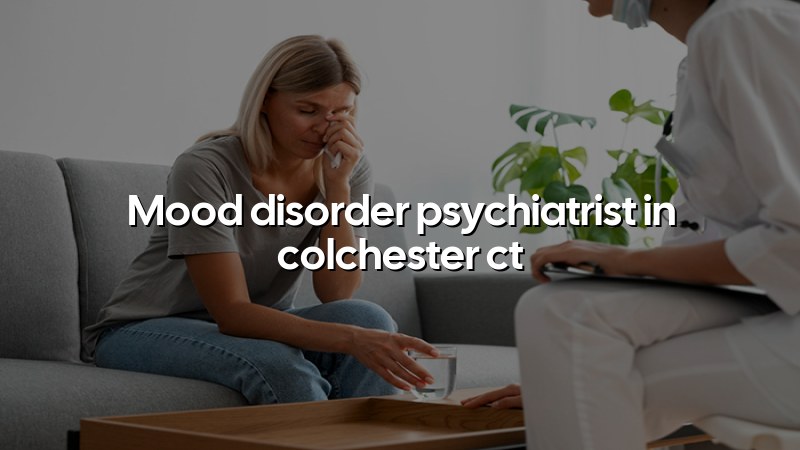
What Sindhia Evaluates — And Why It Matters
High-functioning mood disorder often involves a presentation that a brief screening might miss. The PHQ-9 asks whether you're functioning — and if you are, the score looks manageable. But Sindhia asks different questions: What's the quality of your daily life, not just whether you're getting through it? What's it costing you to cope? When did you last feel genuinely okay, not just not-terrible? How are your relationships? Your sleep? Your sense of future? Those questions reveal a clinical picture that a checkbox misses. And when that picture is clear, treatment can be calibrated to what you're actually dealing with.
Telehealth and In-Person Options for Colchester Patients
Colchester is a bit of a drive from most providers — telehealth is genuinely useful here. Sindhia offers secure video appointments for all Connecticut residents, which means your initial evaluation and follow-up appointments can happen from home. In-person visits are also available at 2049 Silas Deane Hwy, Suite 209, Rocky Hill, if that's your preference. Insurance accepted: Aetna, Cigna, Husky Health, Medicaid, United Healthcare, Anthem, and ConnectiCare. Call 860-515-8689 to get started, or book directly online.
Frequently Asked Questions
Serving Colchester, CT and all of Connecticut via telehealth.
Call 860-515-8689 or book online below.
Book an Appointment