Mood Disorder Treatment in Berlin, CT
PMDD and Mood Disorder Care in Berlin, CT
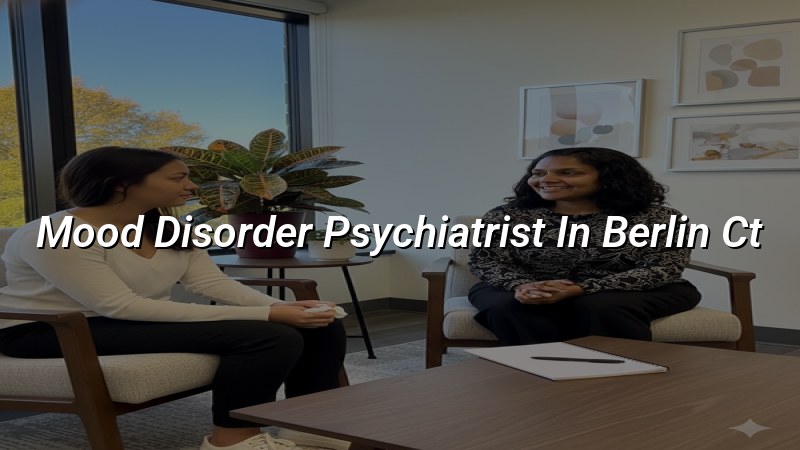
You track the calendar because you have to. Around the same point every month, something shifts — and it's not just irritability or bloating. It's rage that comes from nowhere. Or a despair so heavy it's hard to get out of bed. Or an anxiety so loud it drowns out everything else. And then, a few days after your period starts, it lifts. Like it was never there. If that cycle sounds familiar, you might be dealing with PMDD — premenstrual dysphoric disorder — a real, diagnosable mood disorder tied to your menstrual cycle. It's not a personality flaw. It's not you being "too sensitive." And it responds to treatment. Sindhia Shyras, APRN at Elite Health LLC has helped patients in Berlin and across Connecticut finally understand what's been happening to them each month — and do something about it.
What PMDD Actually Is — And Why It's Often Missed
PMDD is more than PMS. The symptoms are significantly more severe, they interfere with your ability to function at work, in relationships, and at home, and they follow a predictable hormonal pattern — typically appearing in the luteal phase (after ovulation) and resolving once menstruation begins. What makes it hard to catch is that the good weeks genuinely feel fine. So you convince yourself that maybe you're overreacting. Maybe it's stress. Maybe it's just who you are. But if your quality of life is reliably derailed for a week or two every single month, that deserves a real clinical evaluation — not a shrug.
How Sindhia Approaches PMDD Evaluation and Treatment
The first step is understanding your pattern — which means talking through your history, your cycle, and what changes when. Sindhia will ask about your mood symptoms in detail, not just a checklist. From there, treatment often includes medication — certain SSRIs used in specific ways have strong evidence for PMDD — along with supportive strategies for managing the most difficult days. Some people do well with continuous treatment; others respond better to targeted dosing. The approach depends on you, not a protocol.

You Don't Have to Keep Managing This Alone
A lot of people with PMDD develop systems — they warn their partners, they clear their calendars, they white-knuckle through the worst days and wait for it to pass. That works, to a point. But it's exhausting. And it's not the same as actually getting better. Sindhia sees patients in person at 2049 Silas Deane Hwy, Suite 209 in Rocky Hill — a straightforward drive from Berlin — and via telehealth across Connecticut. She accepts Aetna, Cigna, Husky Health, Medicaid, United Healthcare, Anthem, and ConnectiCare. Call 860-515-8689 to get started.
Frequently Asked Questions
Serving Berlin, CT and all of Connecticut via telehealth.
Call 860-515-8689 or book online below.
Book an Appointment