Insomnia Treatment in Danbury, CT
Insomnia Psychiatrist Serving Danbury, CT
There's a particular exhaustion that builds when you've been sleeping badly for months. Not just physical tired — the kind where you feel worn through, where you lose track of what normal even felt like. Danbury has a busy, working community — people commuting, running households, managing real pressures every day. And when sleep falls apart, everything else gets harder. The good news is that chronic insomnia — real, persistent sleeplessness — is one of the most treatable conditions in psychiatric care. Sindhia Shyras, APRN sees Danbury patients through telehealth across Connecticut and in person from Rocky Hill. She also offers care in Malayalam, Tamil, and Telugu in addition to English — because language shouldn't be a barrier to getting help.
CBT-I: The Non-Medication Approach That Actually Works
Most people assume insomnia treatment means sleeping pills. But the clinical gold standard for chronic insomnia — the approach with the strongest research behind it — is Cognitive Behavioral Therapy for Insomnia, or CBT-I. It's not relaxation advice or general wellness tips. It's a structured set of techniques that directly target the patterns that keep insomnia going. Things like sleep restriction therapy — which sounds counterintuitive but works by consolidating sleep and rebuilding the brain's sleep drive. Or stimulus control, which is about rebuilding the association between your bed and actual sleep rather than lying awake feeling frustrated. These techniques address the learned aspects of chronic insomnia, and the improvements last — which is a real advantage over some medication-only approaches.
When Medication Makes Sense
CBT-I is effective, but it's not the only option — and for some people, medication is the right place to start. When insomnia is severely disrupting functioning, medication can bring fast enough relief to make everything else more manageable. Sindhia thinks carefully about which medication fits each patient's situation. There's no one-size answer here. Trazodone, mirtazapine, hydroxyzine, quetiapine — each works differently and suits different patterns. The choice depends on what's actually driving your sleeplessness, your other health factors, and what you've tried before. She'll walk through the reasoning with you, not just hand you a script.
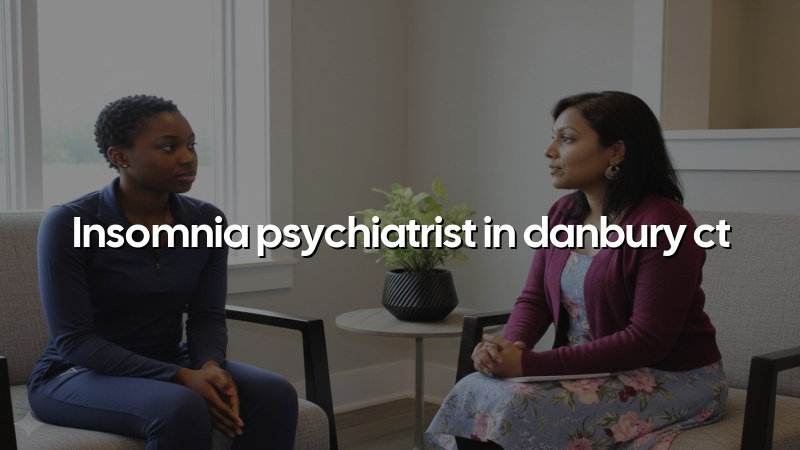
Multilingual Care and Telehealth Access
Danbury has a large and diverse community, and Sindhia's practice reflects that. She sees patients in English, Malayalam, Tamil, and Telugu — so if you're more comfortable speaking about your health in your primary language, that's possible here. And telehealth means you don't need to travel to Rocky Hill for every visit. Elite Health accepts Aetna, Cigna, Husky Health, Medicaid, United Healthcare, Anthem, ConnectiCare, and self-pay.
Frequently Asked Questions
Serving Danbury, CT and all of Connecticut via telehealth.
Call 860-515-8689 or book online below.
Book an Appointment