Insomnia Treatment in Milford, CT
Insomnia Psychiatrist in Milford, CT — The 3am Anxiety Spiral and How to Break It
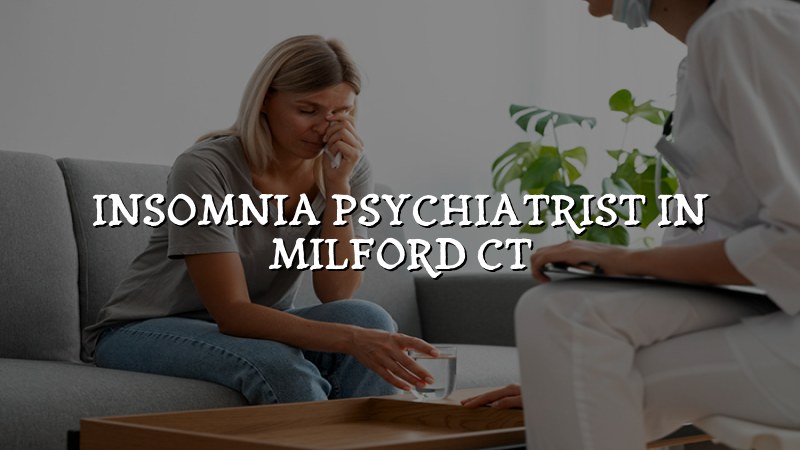
It's 3am and your eyes just opened. You don't know why. But within about thirty seconds, your brain has already moved on from the question of why to a list of everything you're worried about. The thing you said at work yesterday. The bill you forgot to pay. Whether you remembered to lock the door. The bigger, heavier stuff underneath that. Your heart picks up a little and your mind starts racing, and you know — you already know — that sleep is gone for the night. You're going to lie there for two hours and then finally drift off right before the alarm. And the worst part is that tomorrow night, you'll remember this happened, and you'll go to bed already half-dreading it. That anticipatory dread is its own form of anxiety, and it feeds the insomnia. For Milford residents caught in this cycle, there's a way out — but it requires treating both the anxiety and the insomnia, not just one. Sindhia Shyras, APRN is a board-certified Psychiatric Nurse Practitioner with over nine years of experience doing exactly that. She's available by telehealth or in person at our Rocky Hill office.
Why Anxiety and Insomnia Reinforce Each Other
Anxiety is, at its core, a hyperaroused nervous system — your brain running threat-detection on overdrive. That's the opposite of the calm, slow descent into sleep that a resting brain needs. So anxiety keeps you from falling asleep, or wakes you in the middle of the night when your sleep is at its lightest. And then sleep deprivation — because it makes your brain more reactive, more irritable, less able to regulate emotion — makes anxiety worse the next day. You go to bed more anxious. You sleep worse. You wake up more anxious. Round and round. Milford's shoreline community has a lot of people dealing with this quietly — it's one of the more common patterns Sindhia sees, and it responds very well when both sides are addressed together.
Treating the Root, Not Just the Symptom
A lot of people try to manage the insomnia without ever addressing the anxiety driving it, and it doesn't work — at least not for long. OTC sleep aids knock you out for a night or two. Herbal teas take the edge off if the anxiety is mild. But if your nervous system is chronically activated at bedtime, you need something that speaks directly to that. Sindhia might recommend medications that address both anxiety and sleep — certain antidepressants like mirtazapine, or hydroxyzine for anxiety-driven sleep disruption. She might also incorporate CBT-I techniques that specifically target the cognitive spiral that hijacks your nights. And she'll work with the anxiety directly, not just as a footnote to the insomnia.
Getting Care in Milford — or Without Leaving Home
Telehealth is available to any Connecticut resident and honestly works well for anxiety and insomnia care — no added stress of traffic or finding parking. You meet with Sindhia by secure video from wherever you are. If you'd prefer to come in, our Rocky Hill office at 2049 Silas Deane Hwy, Ste 209 is a straight shot up I-95 and I-91. Sindhia accepts Aetna, Cigna, Husky Health, Medicaid, United Healthcare, Anthem, ConnectiCare, and self-pay. Call 860-515-8689 or book online to get started.
Frequently Asked Questions
Serving Milford, CT and all of Connecticut via telehealth.
Call 860-515-8689 or book online below.
Book an Appointment