Switching Antidepressants in Stamford CT
Switching Antidepressants in Stamford CT
Switching antidepressants in Stamford CT can feel stressful, especially if you’re already dealing with mood changes, sleep problems, or the worry that a current medication isn’t the right fit. People usually come to this question because side effects are hard to tolerate, symptoms have changed, or the medicine helped at first and then stopped doing enough. This page explains what the switch process usually looks like, what to ask about during a visit, and how follow-up care is handled so you can make informed decisions with a clinician.
At Elite Health LLC, care is provided by Sindhia Shyras, APRN, a board-certified Psychiatric Nurse Practitioner with years of psychopharmacology experience. We see adults 18 and older in Rocky Hill and by telehealth across Connecticut, including Stamford residents who prefer video visits. If you want a careful medication review and a plan that fits your goals, we can help you start that conversation.
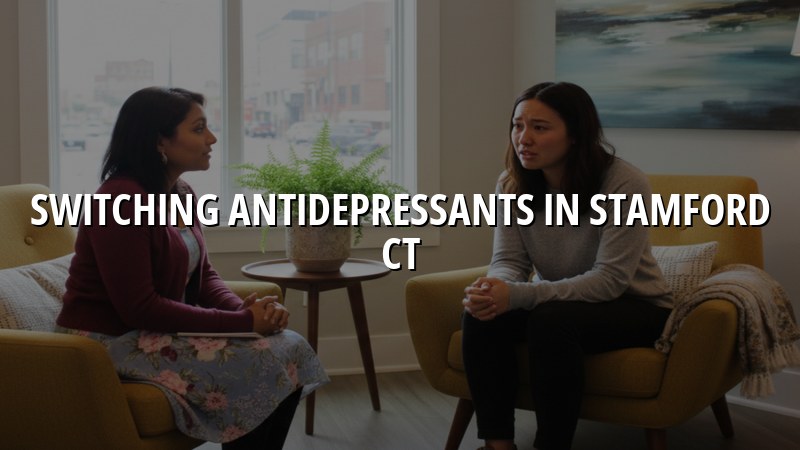
What changes during an antidepressant switch?
Switching antidepressants usually means adjusting one medicine while starting another, or tapering a current medication before introducing a different option. The exact approach depends on the medication, how long you’ve been taking it, your symptom pattern, and whether side effects, sleep disruption, appetite changes, or emotional blunting are part of the picture. A switch is not a one-size-fits-all event. It starts with a clinical review of what you’ve taken, how you responded, and what still feels off. In Stamford, many adults ask about this after several months of trial and error. That’s normal, and it’s exactly the kind of discussion a psychiatric evaluation is meant to support.
Signs that a medication review may be overdue
People often wait longer than they should because they hope things will settle on their own. Sometimes they do. Other times, the pattern is clearer: mood remains low, anxiety stays high, sleep keeps breaking up, or the side effects are harder to live with than the original symptoms. You might also notice that the medication only partially helps, or that you feel more like yourself at one point in the day and then flat or wired later. Those are the kinds of details that matter in follow-up care, because they help us decide whether a dose change, a gradual transition, or a different medication class makes more sense.
What the first conversation usually covers
The first visit is about getting the story right. We talk through your history, current symptoms, other medical conditions, sleep, concentration, stress, and any past medication response. If you’re coming from Stamford by telehealth, that conversation still happens in detail and at a pace that gives you room to ask questions. We also discuss what the medication is supposed to help with, what side effects to watch for, and how the plan will be monitored over time. That steady, step-by-step review is often the part people say they wanted all along.
- A medication switch should be planned with a clinician who can review the full picture, not just one symptom.
- Sleep, appetite, concentration, and energy changes are often part of the conversation because they shape the treatment plan.
- Telehealth makes it possible for Connecticut adults to get medication follow-up without driving to Rocky Hill.
- If insurance questions come up, we route those to the insurance and payment page so you can check benefits the right way.
How a medication change is usually handled
When we talk about switching antidepressants, the main goal is to keep the process thoughtful and closely monitored. Some medications are changed with a taper, some with overlap, and some with a more direct switch, but those decisions are made by the prescribing clinician after reviewing your history and current response. The point is to reduce guesswork. You should know what the plan is, what symptoms are being tracked, and when to reach out if something doesn’t feel right. For adults in Stamford and across Connecticut, that often means a mix of medication management, supportive therapy, and scheduled follow-up.
- Review the current medicine. We look at how long you’ve taken it, what changed after you started it, and what side effects or benefits you’ve noticed.
- Talk through the reason for the switch. The discussion may center on incomplete response, tolerability, timing, or a change in symptoms.
- Choose a transition method. The clinician decides whether the medication should be tapered, overlapped, or changed another way based on safety and fit.
- Set follow-up checkpoints. We track mood, sleep, focus, stress, and side effects so the plan can be adjusted as needed.
Comparing common switch situations
| Situation | What the clinician reviews | Why follow-up matters |
|---|---|---|
| Side effects are hard to tolerate | Which symptoms started after the medication, how strong they are, and whether they affect daily life | To decide whether a different option may fit better |
| Symptoms improved only partly | Which symptoms changed, which ones stayed the same, and how long the medicine has been in use | To determine whether a switch or another adjustment is more appropriate |
| Sleep or energy changed a lot | Timing, pattern, and whether the change feels linked to the medication or to stress | To track whether the current plan is helping or getting in the way |
| Past medications worked differently | Which medicines were tried before and what your response was | To guide future choices with more context |
What Stamford patients can expect from follow-up care
If you live in Stamford, in-person care may not be the easiest option depending on your schedule, so telehealth often becomes the practical way to stay connected. Elite Health LLC sees Connecticut adults statewide, and that includes people who want medication monitoring without taking time off for a long drive. Follow-up visits are used to check mood, sleep, concentration, stress, and any side effects that have come up since the last appointment. Those visits also give space for supportive counselling, which many adults find helpful while a medication plan is being adjusted. If you prefer to meet in person, our Rocky Hill office is open Monday through Friday, 9:00 am to 5:00 pm.
Questions to bring to your appointment
A good medication visit is more useful when you bring specific concerns. You don’t need to know the right clinical terms. Just describe what you’ve noticed. If you’ve been keeping track of sleep, appetite, missed work, restlessness, or times of day when symptoms feel worse, that detail can help a lot. For people who feel unsure where to begin, our appointment information page explains how visits work and what to expect before you book. We also hear a lot of questions that belong on the FAQ page, especially about follow-up timing and privacy.
A few practical tips before you change antidepressants
The smoother switches usually happen when people have a clear list of what they’re taking, what changed, and what they want to improve. You do not need to solve the medication puzzle alone. Bring the details you can remember, and we’ll work from there. These small steps make the appointment more productive and help the clinician tailor the plan to your history rather than guessing.
- Write down the names of your current and past psychiatric medications before the visit.
- Note any side effects that seemed to start after a medication change.
- Track sleep, mood, and concentration for a few days if you can.
- Tell the clinician if you’ve had trouble stopping a medication in the past.
How Elite Health LLC Can Help
Elite Health LLC offers psychiatric evaluation, medication management, telehealth psychiatry, and supportive therapy for adults who are thinking about switching antidepressants in Stamford CT. Sindhia Shyras, APRN takes a careful, evidence-based approach so your options are reviewed with your history, goals, and response in mind. If you’re ready to talk through the next step, we’d be glad to meet with you and build a plan together.
Call 860-515-8689, email info@ctelitehealth.com, or visit us at 2049 Silas Deane Hwy, Ste 209, Rocky Hill, CT 06067.
Frequently Asked Questions
If you’re weighing a medication change, you do not have to sort through it by yourself. A careful review, a clear plan, and regular follow-up can make the process much easier to understand. Elite Health LLC is here for adults in Stamford and anywhere in Connecticut who want that kind of conversation.
Serving Stamford CT and all of Connecticut via telehealth.
Call 860-515-8689, book online below, or send us a message.
Book an Appointment