Trauma Informed Psychiatrist in Hartford CT
Trauma Informed Psychiatrist in Hartford CT
If you’re looking for a trauma informed psychiatrist in Hartford CT, you may already know that being in a room, filling out forms, or talking about past experiences can feel hard before treatment even starts. Many adults want help with anxiety, depression, sleep changes, mood swings, panic, or concentration problems, but they also want care that feels calm, respectful, and predictable. This page explains how trauma-informed psychiatric care works at Elite Health LLC and what you can expect from the first visit through follow-up.
At Elite Health LLC, Sindhia Shyras, APRN provides adult psychiatric care from our Rocky Hill office and by secure telehealth across Connecticut. Her approach is patient-centred and judgment-free, with attention to safety, choice, and clear communication. If you want to understand how an evaluation works, what medication management may involve, or how to start care without feeling rushed, you’re in the right place.
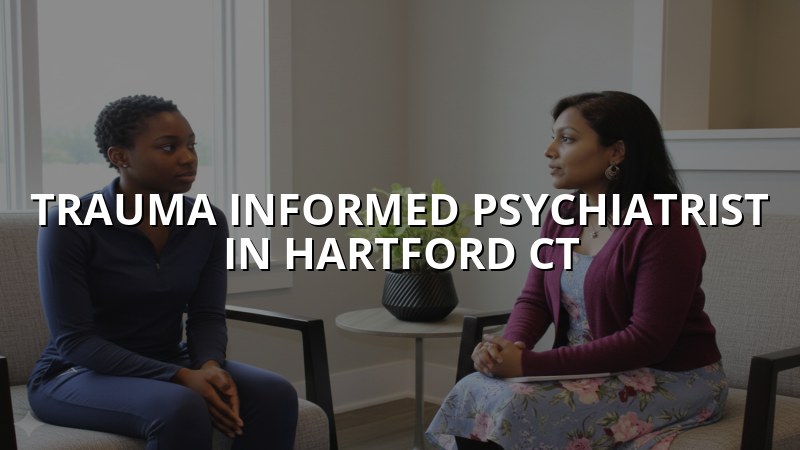
What trauma-informed psychiatric care changes
A trauma-informed visit is still a psychiatric evaluation, but the way the visit is handled matters just as much as the questions being asked. People who have lived through abuse, violence, loss, medical trauma, incarceration, immigration stress, or other hard experiences often do better when they know what will happen next, why a question is being asked, and that they can pause if something feels too much. In our practice, we focus on a steady pace, direct language, and treatment planning that respects your limits. The goal is not to force details. The goal is to understand how your symptoms affect daily life so care can be planned carefully.
What it can look like day to day
Trauma can show up in ways that don’t always sound like trauma at first. Some adults describe poor sleep, a jumpy nervous system, irritability, low mood, trouble trusting providers, or feeling on guard in waiting rooms and during video visits. Others feel shut down, numb, or exhausted and can’t quite explain why. A trauma-informed approach gives space for all of that without making you prove anything. We listen for patterns, not just labels, and we keep the conversation practical. That matters for people commuting from Hartford, New Britain, Wethersfield, or anywhere else in the state who need care that fits real life.
How the first visit is handled
The first session usually covers your background, current symptoms, medical history, past treatment, and what you want help with now. Sindhia Shyras, APRN explains options in plain language, including medication, supportive therapy, or a combination when appropriate. You’ll also hear about possible benefits and side effects before any plan is made. That kind of conversation helps people feel more grounded, especially if previous care felt rushed or unclear. If you prefer telehealth, the same careful approach applies across Connecticut.
- You can ask for the pace to slow down if a question feels hard to answer.
- You’ll know what the next step is before the visit moves on.
- Your treatment plan is built around your goals, not a scripted checklist.
- Follow-up visits look at sleep, mood, stress, concentration, and side effects in a practical way.
How treatment usually starts and what happens after that
Most people want to know the shape of care before they book. That makes sense. Psychiatric care works best when you know what you’re signing up for, how follow-up happens, and where telehealth or in-person visits fit. Below is the usual flow at Elite Health LLC, from the first call through ongoing monitoring. If you’re comparing options, the appointment process and frequently asked questions pages can help too.
- Start with an evaluation. The first appointment focuses on your history, symptoms, stressors, health background, and goals. That gives us the information needed to make an informed assessment.
- Talk through the plan. If medication, supportive therapy, or both seem appropriate, we explain the options in plain terms so you can ask questions before deciding.
- Set the follow-up rhythm. Ongoing visits track how you’re sleeping, thinking, functioning, and tolerating treatment. Those visits are where small changes get reviewed.
- Adjust carefully. If the clinical picture changes, the plan may be updated. The point is steady monitoring, not guesswork.
Common signs people bring to a trauma-informed psychiatrist
We see adults who are dealing with a mix of symptoms that often overlap. Some come in after a long stretch of “pushing through it.” Others have already tried one or more treatments and want a different style of care. A trauma-informed psychiatric visit can be a good fit when you want the assessment to include both symptoms and the context around them. It’s especially helpful when past experiences with healthcare, work, family, or safety issues have made it hard to open up.
| What people may notice | How it can show up | What the visit focuses on |
|---|---|---|
| Sleep trouble | Light sleep, waking often, nightmares, or not feeling rested | Patterns, triggers, and how sleep affects mood and energy |
| Hypervigilance | Feeling tense, alert, or easily startled | Safety, stress response, and daily impact |
| Low mood or numbness | Loss of interest, withdrawal, flatness, or heavy fatigue | Symptoms, history, and possible treatment options |
| Panic or anxiety | Racing heart, shortness of breath, dread, or sudden fear | Triggers, frequency, and coping supports |
Why people around Hartford ask for this approach
Hartford is close enough to Rocky Hill that in-person care can work for many adults in Hartford County, while telehealth helps people across Connecticut who want to avoid another stressful drive. Some patients live or work along I-91, Route 99, or nearby town corridors and want a psychiatric office that isn’t an ordeal to reach. Others simply want a provider who understands that trust is earned during the appointment, not promised ahead of time. That is where trauma-informed care matters most.
Practical things that help the visit go smoothly
Small details can make a real difference. We keep the process structured because predictability helps many adults feel more at ease. If you’re preparing for a first visit, these points are worth keeping in mind. They’re simple, but they matter.
- Bring a current list of medications, even if the list is incomplete.
- Write down the main symptoms you want help with so nothing important gets lost.
- Think about what has or hasn’t helped in the past, including side effects.
- Choose telehealth if being at home makes it easier to speak freely.
- Use the office hours, Monday through Friday from 9:00 am to 5:00 pm, to ask about scheduling or insurance verification.
Insurance, payment, and access questions
Coverage varies by individual plan, so we don’t guess about benefits on a public page. If you’re asking about fees, self-pay, or what your plan may cover, the right place to start is our insurance page. You can also call 860-515-8689 and ask our team to help you understand the verification process. For people who are comparing options from Hartford, Rocky Hill, or farther away in Connecticut, that conversation often clears up the biggest unknowns before the first visit.
What a first appointment is trying to accomplish
The first appointment is about making an accurate assessment and seeing whether our style of care fits what you need. If medication management is appropriate, the plan is discussed carefully. If supportive therapy is useful, that may be woven into follow-up visits. If another type of care is a better match, we can discuss provider referrals so you’re not left wondering what to do next.
How Elite Health LLC Can Help
Elite Health LLC offers psychiatric evaluation, medication management, telehealth psychiatry, supportive therapy, and individualized care planning for adults 18 and older. Sindhia Shyras, APRN brings nine-plus years of clinical experience and a calm, evidence-based approach to every visit. If you want trauma-informed psychiatric care in Hartford County with the option of statewide telehealth, we’re ready to help you start.
Call 860-515-8689, email info@ctelitehealth.com, or visit us at 2049 Silas Deane Hwy, Ste 209, Rocky Hill, CT 06067.
Frequently Asked Questions
If you’ve been trying to find a trauma informed psychiatrist in Hartford CT, you don’t need to force your way through a visit that feels unsafe or unclear. You can start with a calm, adult-focused evaluation and build a plan from there, in person in Rocky Hill or by telehealth anywhere in Connecticut.
Serving Hartford County and all of Connecticut via telehealth.
Call 860-515-8689, book online below, or send us a message.
Book an Appointment