Telehealth ADHD Evaluation in Connecticut
Telehealth ADHD Evaluation in Connecticut
A telehealth ADHD evaluation in Connecticut can be a good first step when focus, organization, follow-through or constant mental restlessness keep getting in the way of work and daily life. If you've been wondering whether your symptoms need a formal psychiatric assessment, this page explains what that visit looks like and how to prepare for it. You'll also learn how follow-up care works when treatment is clinically appropriate, all from an adult-only practice serving Connecticut residents statewide.
At Elite Health LLC, Sindhia Shyras, APRN provides adult psychiatric care with a careful, structured interview and a collaborative style. We serve patients 18 and older in Rocky Hill and by secure telehealth across Connecticut, so you can start care without needing to travel if video visits are a better fit. If you want to compare visit options, our appointment page and FAQ page are helpful places to start.
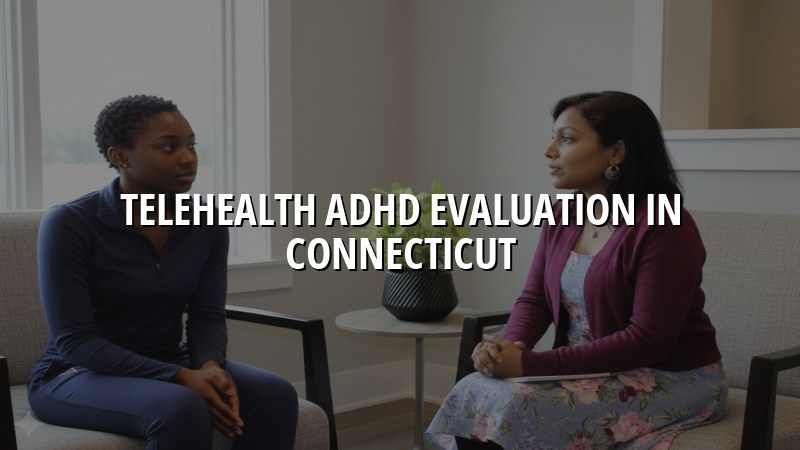
What a telehealth ADHD evaluation in Connecticut actually looks at
The goal of a telehealth ADHD evaluation in Connecticut is not to rush to a label. It's to understand how your attention, impulsivity, sleep, stress and daily routines fit together, and whether something else may be playing a role too. In the first visit, we review your background, current health history, work or school demands, past treatment, and the symptoms that brought you in. For many adults, the issue is not just distractibility. It's missed deadlines, losing track of time, starting tasks and then stalling, or feeling mentally scattered all day. A good psychiatric assessment looks at the whole picture before any treatment plan is discussed.
Why adults often seek help now
A lot of people reach out only after they've been managing on their own for years. That may mean working extra hours to compensate, leaning on reminders from a spouse or coworker, or keeping everything in one place just to stay organized. Others notice that the pressure finally catches up during a job change, graduate school, a new home, or a season of poor sleep. Adult ADHD can also overlap with anxiety, depression or insomnia, so the conversation has to stay broad. We look for patterns, not guesses.
What the clinician is trying to sort out
During telehealth, Sindhia Shyras, APRN uses evidence-based psychiatric interviewing to understand whether your concerns fit ADHD, another mood or anxiety condition, or more than one issue at once. That matters because treatment is different depending on what is driving the symptoms. The evaluation also helps identify strengths, routines and goals, which become part of the care plan if you decide to move forward. If you are comparing services or wondering about coverage, the details on insurance and payment cover benefits verification and self-pay options.
- You'll discuss attention, memory, restlessness, sleep and how symptoms affect daily tasks.
- We review health history and prior treatment so the assessment is grounded in context.
- Telehealth visits are secure and available to Connecticut residents anywhere in the state.
- If medication is part of the plan, it's discussed carefully with possible side effects and monitoring.
How the first visit usually unfolds
People often want to know what happens minute by minute. The short answer is that we start with your story, then we organize the details into a clinical picture. For a telehealth ADHD evaluation in Connecticut, that means giving you space to explain what has been happening, how long it's been going on, and what you've already tried. We also talk about sleep, stress, substance use when relevant, medical history and any past mental health care. Nothing is rushed. The point is to leave the visit with a realistic plan, not a vague impression.
- Join the secure video visit. We confirm your identity, review the reason for the appointment and make sure the connection is working before the conversation starts.
- Share your symptoms in plain language. Tell us what has been hard, when it started, and what school, work or home tasks are getting affected.
- Review history and possible overlaps. We ask about sleep, anxiety, mood, past treatment and health factors that can look similar to ADHD.
- Discuss next steps. If ADHD is a fit, we go over treatment options such as medication management, supportive therapy, or a combination when clinically appropriate.
Telehealth versus in-person care
| Visit type | Best for | What to expect |
|---|---|---|
| Telehealth evaluation | Adults anywhere in Connecticut who prefer video visits | Secure psychiatric assessment from home or another private setting |
| In-person evaluation | People who can get to Rocky Hill | Face-to-face visit at 2049 Silas Deane Hwy, Ste 209 |
| Follow-up telehealth | Ongoing symptom monitoring and medication checks | Review of focus, sleep, mood, stress and side effects when relevant |
| Supportive therapy visit | Patients who want practical coping work along with psychiatric care | Structured discussion with evidence-based counseling techniques |
Why Connecticut adults choose video visits
Telehealth can make the first step feel easier. Some adults don't want to take time off work, sit in traffic on I-91 or I-84, or spend extra energy arranging transportation before they've even had an assessment. Others live far from Rocky Hill but still want care from a Connecticut clinician. Because the practice is licensed for Connecticut residents only, telehealth stays local even when the visit happens online. If you want to read more about our clinician's background and languages, the about page has the details.
What helps before your appointment
A little preparation makes the visit smoother. It helps to have your medication list nearby, notes on past diagnoses if you have them, and a few examples of how attention problems show up in everyday life. If you are seeking care for the first time, don't worry about using perfect clinical language. Just be specific. Say what you're missing, what keeps slipping, and what you hope will be different after treatment starts. A quiet room and a stable internet connection usually go a long way.
How follow-up care works after the evaluation
If your assessment leads to a treatment plan, follow-up visits are where we check what is changing and what still needs attention. That may include concentration, task completion, mood, sleep, appetite or stress. Medication management, when clinically appropriate, is done with monitoring and dose adjustments based on your response. Supportive therapy is often woven into these visits too, especially when executive-function problems have created a lot of frustration or self-doubt. The goal is to keep the plan useful in real life, not just on paper.
Things we track over time
We look for practical signs that tell us how the plan is holding up. That includes whether your mornings are less chaotic, whether you are finishing tasks more reliably, or whether side effects are getting in the way. We also pay attention to the parts people don't always mention at first, like sleep shifting later, appetite changes or feeling over-activated. Honest follow-up makes care safer and more useful. If you have questions about benefits or self-pay, send them to insurance so they can be handled in the right place.
Who this service is for
This page is for adults 18 and older who want a clear psychiatric evaluation from a Connecticut provider without the commute. It may be a fit if you've been pushing through attention problems for years, if your coping strategies are no longer enough, or if a recent life change made the symptoms harder to manage. We see young adults, working adults and seniors, and each visit is individual care only. We do not treat children or adolescents, and we do not provide family or couples therapy. If your concern is about a referral relationship or continuity of care with another clinician, the referral page explains how that works.
How Elite Health LLC Can Help
Elite Health LLC offers adult psychiatric evaluation, medication management, telehealth psychiatry and supportive therapy in a setting that is confidential, culturally sensitive and judgment-free. If you are looking for a telehealth ADHD evaluation in Connecticut, we can help you start with a careful assessment and move forward with a plan that fits your goals and clinical needs. Call 860-515-8689, email info@ctelitehealth.com, or visit us at 2049 Silas Deane Hwy, Ste 209, Rocky Hill, CT 06067.
Call 860-515-8689, email info@ctelitehealth.com, or visit us at 2049 Silas Deane Hwy, Ste 209, Rocky Hill, CT 06067.
Frequently Asked Questions
A telehealth ADHD evaluation in Connecticut gives you a direct way to get an adult psychiatric assessment without losing a day to travel. If attention problems, disorganization or mental restlessness have been getting in the way, we're here to help you sort out what's going on and what should happen next.
Serving Rocky Hill and all of Connecticut via telehealth.
Call 860-515-8689, book online below, or send us a message.
Book an Appointment