OCD Treatment Psychiatrist in Waterbury CT
OCD Treatment Psychiatrist in Waterbury CT
If you are searching for an OCD treatment psychiatrist in Waterbury CT, you may already know how draining the daily loop can be. Repeating thoughts, checking, counting, cleaning, asking for reassurance, or mentally reviewing the same worry over and over can take up a lot of your day. This page explains what adult OCD care looks like, how a psychiatric evaluation works, and how you can get help from a Connecticut clinician without feeling rushed or judged.
At Elite Health LLC, care is provided by Sindhia Shyras, APRN, a board-certified Psychiatric Nurse Practitioner with more than nine years of clinical experience. We see adults 18 and older from Waterbury and across Connecticut by telehealth, and we also offer in-person visits at our Rocky Hill office for people who can make the trip. Our approach is collaborative, evidence-based, and grounded in real conversation about your symptoms, goals, and day-to-day stressors.
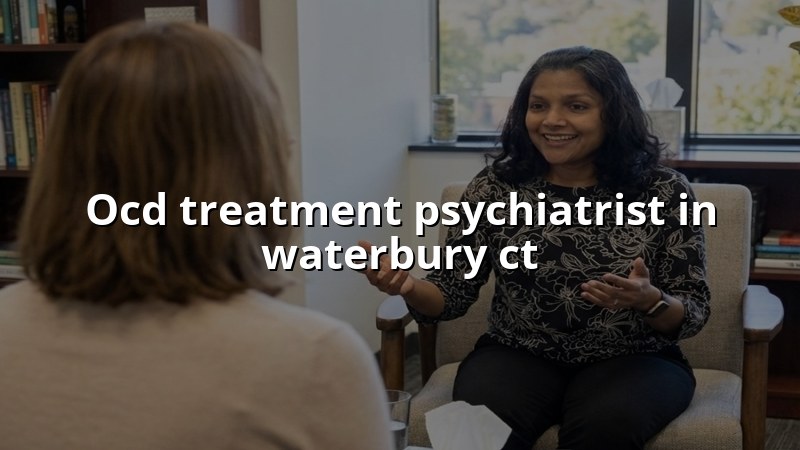
What OCD care is really trying to address
Obsessive-compulsive disorder is more than being neat or liking things a certain way. People usually come in because intrusive thoughts keep showing up, and the urge to neutralize them starts shaping the day. That can mean repeated checking, washing, ordering, counting, or mental rituals that never quite feel finished. In an adult psychiatric setting, the goal is to understand the pattern clearly, separate OCD from other causes of anxiety or rumination, and build a care plan that fits your life in Waterbury, whether you work downtown, commute toward Danbury, or just need telehealth from home.
How it can show up from morning to night
A lot of people describe the same kind of pattern: they wake up with a thought, get stuck on it, and spend the day trying to feel certain that nothing bad will happen. For some adults, the compulsions are visible. For others, they stay inside the head, like replaying a conversation, silently counting, or checking memory over and over. That hidden version can be exhausting because it doesn't look dramatic from the outside, but it can still eat up time, attention, and sleep.
What treatment usually involves in our office
When someone meets with us for OCD treatment, we start with a psychiatric evaluation. We ask about the thoughts, the rituals, how long they've been going on, and what happens when you try to resist them. From there, we talk through options such as medication management, supportive therapy, or both, depending on what makes clinical sense. We also review side effects, follow-up timing, and any other mental health concerns that may be happening at the same time, like insomnia, depression, panic symptoms, or trouble concentrating.
- Intrusive thoughts are common in OCD, and they do not mean you want to act on them.
- Compulsions can be physical, like checking locks, or mental, like replaying the same fear again and again.
- Many adults wait a long time before getting help because they think the problem is just stress.
- A careful assessment matters because OCD can overlap with anxiety, depression, PTSD, and insomnia.
How the first appointment usually unfolds
The first visit is where we slow things down. We want to hear the history in plain language, not a polished version. People often worry they'll forget what to say, so it helps to bring notes about symptoms, medications, past treatment, sleep, and anything that makes the thoughts worse. If you're coming from Waterbury, you can book telehealth statewide or plan for an in-person visit in Rocky Hill. Either way, the first session is about building an accurate picture before any treatment decision is made.
- Start with the symptom story. We ask what thoughts keep coming back, what rituals or avoidance patterns follow, and how much time they take each day.
- Review health and medication history. This includes past psychiatric care, current prescriptions, sleep issues, medical conditions, and anything that could affect treatment choices.
- Talk through the care options. We explain whether medication, supportive therapy, or a combination seems appropriate and go over possible side effects in general terms.
- Set follow-up expectations. We decide when to check back in, what symptoms to track, and how you'll reach us if something changes before the next visit.
Treatment approaches adults often discuss with us
There is no one-size-fits-all plan for OCD. Some adults do well with medication support, some prefer to begin with therapy-style work during follow-ups, and many need a combination of both over time. At Elite Health LLC, we keep the discussion practical. We focus on how your symptoms affect work, home routines, relationships, and sleep, then build from there. Because we offer telehealth psychiatry across Connecticut, people in Waterbury don't have to put off care just because the calendar is packed or travel is difficult.
| Care option | What it usually looks like | Why it may be discussed |
|---|---|---|
| Psychiatric evaluation | We review symptoms, history, goals, and other mental health concerns. | It helps confirm the pattern and guide the next step. |
| Medication management | We talk about evidence-based prescribing and monitor response over follow-up visits. | It can be part of care when clinically appropriate. |
| Supportive therapy | We use structured conversation and coping tools during visits. | It can help with stress, routine, and resistance skills. |
| Telehealth psychiatry | Secure video visits for Connecticut residents. | It helps people in Waterbury stay consistent with care. |
What follow-up visits tend to cover
Follow-up visits are not just a quick check of whether something is working. We ask about symptom changes, mood, sleep, concentration, and stress, because OCD often shifts with the rest of life. Some visits are mostly medication management. Others include supportive counselling and practical planning. In our experience, people often use those sessions to talk about specific triggers from the last two weeks, especially around work deadlines, family routines, or long commutes on Route 8 or I-84.
Why Waterbury adults often choose telehealth first
Waterbury is in New Haven County, and for many adults the drive to Rocky Hill can be manageable on some days and a headache on others. Telehealth removes that barrier. If you live in Waterbury, Naugatuck, Wolcott, Watertown, or nearby towns and you're in Connecticut, you can still meet with us from a private, quiet place. That matters when you want steady follow-up without building an entire day around the appointment. Some people start by booking video visits, then come in person later if that feels useful.
We also keep the experience straightforward. You do not need to figure out every treatment detail before you call. If your main question is whether your symptoms sound like OCD, we can talk through that in the appointment. If your real concern is how to start care without disrupting work or family life, we can talk about scheduling and visit format. For many adults, just knowing there is a consistent place to start makes the process less intimidating.
What to bring to a first OCD visit
A little preparation goes a long way. You do not need a perfect summary, and you do not need to explain everything from memory. Bring what you have and we'll take it from there. If you've tried treatment before, old records or a list of previous medications can help. If you are new to psychiatric care, that's fine too. We work from the information you can share in the moment, and we ask follow-up questions to fill in the gaps.
- Write down the main thoughts or rituals that feel hardest to control.
- Note when symptoms started and what seems to make them worse.
- Bring a list of current medications, supplements, and any past psychiatric medicines you've used.
- Think about your goals, such as sleeping better, spending less time checking, or getting through the workday with fewer interruptions.
How Elite Health LLC Can Help
If you're looking for an OCD treatment psychiatrist in Waterbury CT, we can help you take the next step with a psychiatric evaluation, medication management when appropriate, and supportive therapy built into follow-up care. We see adults only, offer telehealth across Connecticut, and keep the process patient-centred and confidential. If you're ready to talk, call us or use online booking to request an appointment.
Call 860-515-8689, email info@ctelitehealth.com, or visit us at 2049 Silas Deane Hwy, Ste 209, Rocky Hill, CT 06067.
Frequently Asked Questions
If the thoughts are taking over your time or making daily routines feel harder than they should, don't wait for the situation to sort itself out. Adult OCD care starts with a real conversation, not a guess. Elite Health LLC can help you take that first step with steady, confidential psychiatric care from a Connecticut clinician.
Serving Waterbury, Rocky Hill, and all of Connecticut via telehealth.
Call 860-515-8689, book online below, or send us a message.
Book an Appointment