Mental Health Therapy Services in Middletown CT
Mental Health Therapy Services in Middletown CT
Mental health therapy services in Middletown CT can mean a lot of different things, and people usually reach out because they want a calm place to talk, sort through symptoms, and understand what kind of care makes sense next. Some are dealing with anxiety or depression that keeps showing up at work, at home, or in sleep. Others already know they need psychiatric help, but they want a clinician who listens, explains options clearly, and keeps the process private and respectful. If that sounds familiar, this page will help you understand what adult care looks like and how to start.
At Elite Health LLC, care is provided by Sindhia Shyras, APRN, a board-certified Psychiatric Nurse Practitioner with more than nine years of experience in psychiatric settings, including correctional and forensic environments. We see adults 18 and older from Middletown and across Connecticut, both in person at our Rocky Hill office and by telehealth statewide. Our approach is patient-centred, evidence-based, and collaborative, with supportive therapy often woven into follow-up visits. If you want to know how the first visit works, our appointment information page is a good place to start.
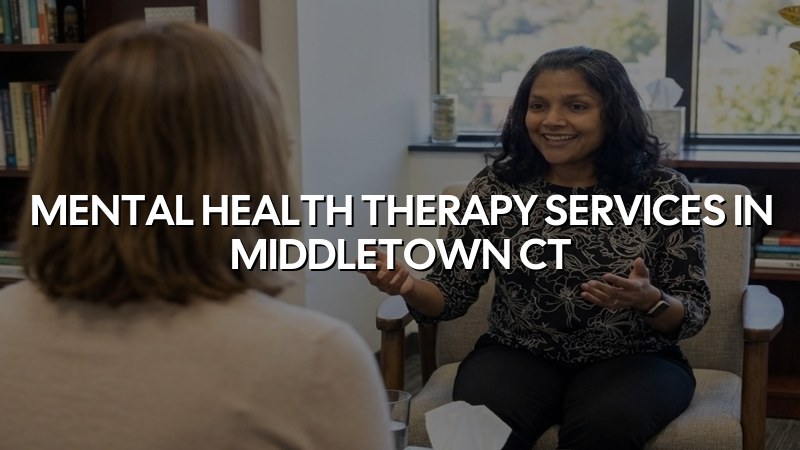
What therapy services actually mean in psychiatric care
When people search for mental health therapy services in Middletown CT, they are usually looking for more than a friendly conversation. They want help understanding symptoms, a plan that fits real life, and a clinician who can adjust care as things change. At Elite Health LLC, therapy is not separated from the rest of treatment. It may sit alongside psychiatric evaluation, medication management, and practical follow-up that looks at sleep, concentration, mood, stress, and daily functioning. The point is to make care feel organized instead of scattered. You should leave a visit knowing what was discussed, what comes next, and why.
How it shows up day to day
Most adults who contact us are not asking for abstract theory. They want help with the kinds of things that pile up: trouble sleeping before a workday, racing thoughts on the drive home, low motivation that makes chores feel heavy, or a mind that keeps circling the same worry. Supportive therapy can give those concerns structure. It gives space to talk, but it also brings the conversation back to patterns, triggers, and coping skills that can actually be used between visits. In our experience, that practical piece matters just as much as the diagnosis itself.
What treatment can include
Care may include a psychiatric evaluation, discussion of medication options when clinically appropriate, or supportive counselling paired with cognitive behavioural techniques. None of that is automatic. The first session is about learning your history, your current symptoms, your health background, and your goals, then deciding together what kind of plan makes sense. If insurance questions are part of the picture, send those to our insurance and payment information page, since coverage varies by individual plan.
- You can expect a private adult-only visit focused on your own goals, not a generic script.
- Supportive therapy can be part of follow-up care even when medication management is also being discussed.
- Telehealth is available statewide for Connecticut residents who prefer to meet from home.
- If you already work with another provider, we can coordinate through referral information for continuity of care.
A practical way to start care
A first appointment is usually where people relax a little, because the process finally becomes concrete. We spend time on background, current symptoms, medical history, and what you want treatment to help with. That gives us enough information to make an accurate assessment instead of guessing. If you live in Middletown, the ride to Rocky Hill is straightforward on Route 9 and nearby connector roads, but plenty of people choose telehealth because it fits work schedules better. Either way, the goal is the same: a clear plan that feels manageable.
- Share what brought you in. We start with the concerns that are most pressing right now, whether that is sleep, mood, anxiety, attention, or something else that has been building for a while.
- Review history and current health. We talk through past treatment, medical conditions, current medicines, and anything else that may shape the plan.
- Discuss options plainly. If therapy, medication, or both are reasonable, we explain the benefits and possible side effects so you can make an informed choice.
- Set follow-up expectations. We decide how often to check in and what we will monitor, such as mood, sleep, concentration, stress, and daily functioning.
- Adjust as needed. Care changes over time, so follow-up visits are used to track response and fine-tune the plan based on what is actually happening.
What to compare when you are looking for therapy services
| What to ask | Why it matters | How Elite Health handles it |
|---|---|---|
| Adult-only care | Confirms the practice sees patients 18 and older | We see adults only, including young adults, adults, and seniors |
| Therapy and medication together | Some people need both, not one or the other | We can discuss supportive therapy, medication management, or a combination when appropriate |
| Telehealth access | Makes follow-up easier for people across the state | Secure telehealth is available to Connecticut residents |
| Clear first-visit process | Helps you know what the appointment will cover | We begin with history, symptoms, goals, and treatment options |
Why Middletown residents often choose a Connecticut telehealth option
Middletown is close enough to Rocky Hill that an in-person visit is very doable for many people, especially with Route 9 connecting the two towns through central Connecticut. Even so, telehealth has become a practical choice for adults who want to avoid time off work, reduce travel, or keep follow-up visits simple. Because Elite Health serves Connecticut residents only, telehealth stays within the state and remains a good fit for people in Middletown, Cromwell, Portland, East Hampton, and nearby communities. Some patients prefer the office setting for their first appointment, then switch to video visits later. Others do the opposite. Both can work.
A few details people usually want before they book
You may be wondering about privacy, scheduling, or whether the visit will feel rushed. Fair questions. Our office hours are Monday through Friday, 9:00 am to 5:00 pm, and we currently accept new patients. The practice uses a judgment-free, confidential approach, and our communication is meant to be direct rather than clinical sounding for its own sake. If you have questions about benefits, self-pay options, or verification, the right place to start is the insurance page or a phone call to our office.
Supportive therapy in follow-up visits
A lot of people expect therapy to mean a separate weekly session with a different provider. Sometimes that is the right setup. Sometimes it is not. In psychiatric follow-up visits, supportive therapy can be folded into the appointment so there is time to talk through stressors, coping skills, routines, sleep, and any changes in symptoms. That can be especially useful when you are already seeing progress, but need a steadier way to keep treatment on track. We also keep language plain, which helps people stay engaged instead of getting lost in jargon.
If you are comparing local options, it can help to read a few frequently asked questions before you book. That way you know how confidentiality works, what medication management involves, and how follow-ups are structured.
How Elite Health LLC Can Help
Elite Health LLC offers psychiatric evaluation, medication management when clinically appropriate, telehealth psychiatry across Connecticut, and supportive therapy built around your goals. Sindhia Shyras, APRN takes time to understand what you are dealing with and what kind of care fits your life right now. If you are looking for mental health therapy services in Middletown CT, we are ready to help you take the next step.
Call 860-515-8689, email info@ctelitehealth.com, or visit us at 2049 Silas Deane Hwy, Ste 209, Rocky Hill, CT 06067.
Frequently Asked Questions
If you want a local psychiatric practice that keeps the process clear and treats you like an adult who deserves straight answers, we can help. For many Middletown residents, the right fit is a provider who can meet in person when needed and offer telehealth when life gets busy. That is exactly how we work.
Serving Middletown CT and all of Connecticut via telehealth.
Call 860-515-8689, book online below, or send us a message.
Book an Appointment