Medication Side Effects Consultation in Norwalk CT
Medication Side Effects Consultation in Norwalk CT
Medication side effects consultation in Norwalk CT is the kind of visit people usually look for after something feels off on a new prescription, a changed dose, or a medication that used to feel fine and suddenly doesn’t. You may be dealing with sleep changes, nausea, foggy thinking, restlessness, low energy, or a mood shift that’s hard to explain. This page gives you a clear idea of what the visit covers, what we ask about, and how we help adults sort out whether a medication issue needs a closer look.
At Elite Health LLC, Sindhia Shyras, APRN provides adult psychiatric care with a careful eye on psychopharmacology, follow-up, and real-life functioning. We see patients in our Rocky Hill office and by telehealth across Connecticut, so if you live in Norwalk and can’t easily get to Hartford County, a video visit may be the right place to start. The first step is simply making the side effects clear enough to assess them well.
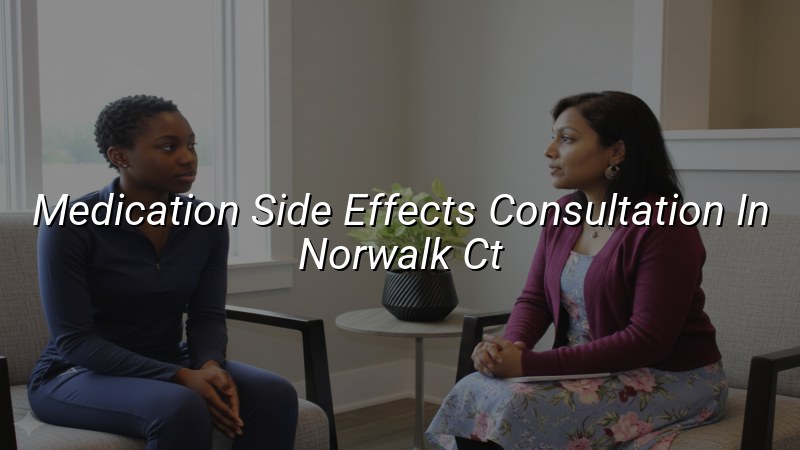
What a medication side effects consultation is really for
A medication side effects consultation is not just a quick yes-or-no check. It’s a structured psychiatric visit where we review the medication list, when the symptoms started, what changed first, and how the side effects are affecting sleep, concentration, appetite, mood, or daily routine. People often assume every new symptom is the medication’s fault, but that isn’t always true. Sometimes the issue is timing, a recent life stressor, a second medication, or a dose that no longer fits the current situation. Our job is to sort through the pattern carefully so the next step makes sense.
How symptoms often show up
In practice, side effects can look ordinary at first. A person may notice they’re sleeping less, feeling wired in the afternoon, having stomach upset after breakfast, or becoming more forgetful during the workday. Others report dry mouth, headaches, slowed thinking, or a flat feeling that makes it harder to care about the day ahead. Because adults describe these changes in different ways, we listen for the timeline as much as the symptom itself. The timing matters more than people expect.
What we look at during the visit
We ask about the medication name, how long you’ve been taking it, any recent changes, and what else you’re taking, including over-the-counter items and supplements. We also review current stress, sleep, mood, and concentration, because those can change how a medication feels from one week to the next. If a medication is helping one symptom while causing another problem, we talk that through in plain language. That is usually the part patients appreciate most: no jargon, no guesswork.
- Write down the first day you noticed the change and what happened around that time.
- Bring every medication, supplement, and as-needed product to the visit, even if it seems minor.
- Track sleep, appetite, concentration, and mood for a few days before the appointment.
- Tell us whether the symptom is constant, happens after a dose, or comes and goes.
What happens during the consultation
Most people want to know what the visit actually looks like. We keep it organized. The appointment is built to gather enough information to understand the medication picture without rushing past the details that matter. If you’re coming from Norwalk, telehealth can make that easier, and if you’re local to Rocky Hill we can see you in person at the office.
- Start with the timeline. We ask when the medication began, when the side effect started, and whether anything else changed at the same time.
- Review the full picture. We look at other medications, past reactions, sleep, mood, stress, and any recent health changes that may matter.
- Talk through options. We explain what changes are sometimes considered, such as closer monitoring, supportive follow-up, or a medication adjustment if clinically appropriate.
- Set the next check-in. Follow-up visits help us see whether the symptom pattern is shifting and whether the plan still fits your needs.
Common side effect patterns and what they may point to
| Pattern | What it can feel like | Why the visit helps |
|---|---|---|
| Sleep changes | Insomnia, early waking, or feeling overly sleepy | We review timing, dose timing, and other causes that may be adding to the problem |
| Digestive upset | Nausea, appetite change, stomach discomfort | We look at when symptoms occur and whether they follow a medication change |
| Cognitive slowing | Foggy thinking, poor focus, slower response time | We consider the full medication list and the effect on daily functioning |
| Activation or restlessness | Feeling keyed up, fidgety, irritable, or unable to settle | We review whether the symptom started after a new medicine or a recent change |
How Norwalk patients can prepare before the visit
If you’re coming from Norwalk, CT, the easiest prep is simple. Write down what you’re taking, what you’ve stopped, and what you think changed first. If you’re using telehealth, have the bottle labels nearby and make sure the connection is private. Norwalk residents often choose telehealth when the drive to Rocky Hill would eat up half the day, while others prefer the office because they want an in-person conversation. Both work. What matters is getting enough detail to make the consultation useful.
Questions that help us narrow things down
You don’t need to arrive with perfect medical language. Plain answers are better. For example, tell us whether the symptom began after a dose change, whether it gets worse in the morning or evening, and whether it affects work, driving, or sleep. If you want more background on coverage and payment, our insurance page explains how verification works, and the FAQ page answers common questions about follow-ups and medication management.
How Elite Health LLC Can Help
We offer psychiatric evaluation, medication management, telehealth psychiatry, and supportive therapy for adults across Connecticut. If medication side effects are getting in the way, Sindhia Shyras, APRN can review the situation carefully and talk through appropriate next steps in a confidential, judgment-free visit. We’re currently accepting new patients, and we’re here to help you get a clearer plan.
Call 860-515-8689, email info@ctelitehealth.com, or visit us at 2049 Silas Deane Hwy, Ste 209, Rocky Hill, CT 06067.
Frequently Asked Questions
If you’re dealing with side effects and you want a careful, adult-focused review, we can help you sort out what’s happening and what comes next. Elite Health LLC offers practical psychiatric care that respects your time, your privacy, and your concerns.
Serving Norwalk, CT and all of Connecticut via telehealth.
Call 860-515-8689, book online below, or send us a message.
Book an Appointment