Grief and Loss Support in Greenwich CT
Grief and Loss Support in Greenwich CT
Grief and loss support in Greenwich CT can help when sadness, sleep trouble, guilt, or constant replaying of a loss starts taking over your day. Some people feel numb. Others feel shaky, distracted, or angry in ways that surprise them. If you’ve been trying to push through and it’s not easing up, this page will help you understand what support can look like, what happens at the first visit, and how to get care from an adult psychiatric practice that serves Connecticut residents.
At Elite Health LLC, care is provided by Sindhia Shyras, APRN, a board-certified Psychiatric Nurse Practitioner with more than 9 years of experience. We work with adults 18 and older in Rocky Hill and by telehealth across Connecticut, including people in Greenwich who want a private, judgment-free place to talk about loss and figure out next steps. The approach is patient-centred, evidence-based, and built around your own pace.
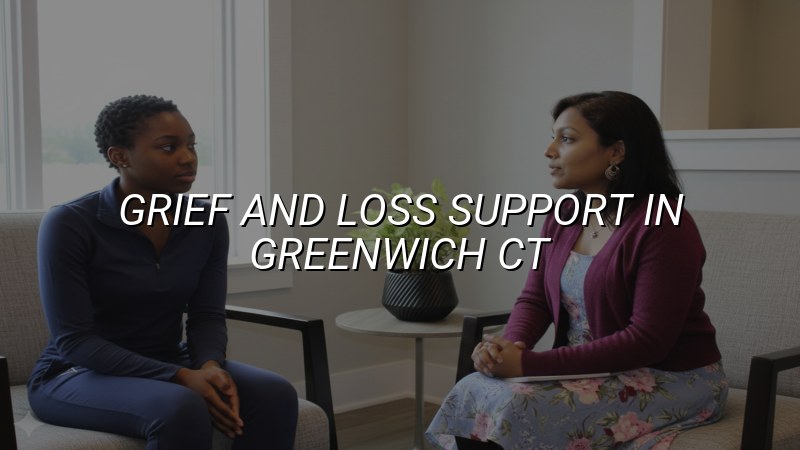
What grief can look like after a loss
Grief does not show up in one neat pattern. Some adults feel waves of sadness after a death, breakup, move, or other major loss. Others stay busy all day and then fall apart at night. We also hear from people who feel it in the body first: chest tightness, poor sleep, headaches, appetite changes, or a short fuse at work or home. In a town like Greenwich, where schedules can be full and people often try to keep things moving, grief can get hidden behind daily demands. That can make it harder to tell when you need more than time and space.
Common signs people mention in the first call
Adults often describe trouble concentrating, pulling away from friends, avoiding reminders, or feeling stuck in regret. Some say they keep wondering if their reaction is “normal.” That question alone is one reason many people seek grief and loss support in Greenwich CT. A visit gives you room to talk through what’s changed, what feels hardest, and whether the symptoms are affecting sleep, work, eating, or relationships.
Support looks different from person to person
There isn’t one right pace for healing after loss, and we don’t force a template onto your experience. Some people need structured supportive therapy and practical coping tools. Others benefit from a psychiatric evaluation to sort out overlapping anxiety, depression, panic, insomnia, or trauma symptoms. Medication management may be discussed when clinically appropriate, but only after a careful assessment and a real conversation about benefits and side effects.
- Grief may affect sleep, concentration, and energy long after the first shock has passed.
- Supportive therapy can give you a steady place to talk without feeling rushed or judged.
- A psychiatric evaluation helps sort out grief from other concerns that may be showing up at the same time.
- Telehealth is available statewide, which is helpful if you live in Greenwich and want to meet from home.
What the first appointment usually covers
The first visit is not about forcing you to tell your whole story in one breath. We start with background, health history, current symptoms, and what you hope life looks like next. That may include how the loss has affected sleep, appetite, motivation, work, or your ability to manage the day. From there, Sindhia Shyras, APRN explains the options in plain language. If medication is part of the plan, we talk about why it may help, what side effects can happen, and how follow-up works. If therapy alone makes more sense, we say that too.
- Start with your story. We ask what happened, what has changed since then, and what feels hardest right now.
- Review your health history. Sleep, current medications, prior treatment, and other medical issues all matter in the assessment.
- Set goals that fit you. Some people want better sleep. Others want to stop feeling stuck or start functioning at work again.
- Choose a plan together. Supportive therapy, medication management, or a mix of both may be discussed based on the evaluation.
- Follow up and adjust. We track mood, sleep, stress, and concentration over time and make changes when needed.
A practical view of care options
People searching for grief and loss support in Greenwich CT usually want to know what each type of care actually does. Here’s a simple reference point. It is not a substitute for an evaluation, but it can make the first step less confusing.
| Care option | What it focuses on | How it is used at Elite Health |
|---|---|---|
| Psychiatric evaluation | Understanding symptoms, history, and goals | Used at the start to shape an accurate plan |
| Supportive therapy | Coping skills, stress, and emotional processing | Often woven into follow-up visits |
| Medication management | Reviewing whether medicine may help clinically | Discussed only after assessment and shared decision-making |
| Telehealth psychiatry | Private care by secure video | Available to Connecticut residents statewide |
Why some people want telehealth for grief support
Telehealth can make it easier to start care when getting out the door feels like too much. For some adults, even a short drive feels heavy after a loss. A secure video visit lets you meet from home anywhere in Connecticut while still getting an adult psychiatric evaluation and follow-up care. Others prefer to come in person to our Rocky Hill office at 2049 Silas Deane Hwy, Ste 209, Rocky Hill, CT 06067. Both visit types are available, and the right choice usually comes down to comfort, routine, and what feels manageable right now.
Questions about insurance are best handled separately
If you’re wondering about coverage, don’t guess. Plans vary, and benefits depend on the individual policy. Our insurance and payment information page explains how verification works and where self-pay fits in. If you still have questions after reading that, you can call the office and we’ll talk it through with you.
Things that can make support more useful
A lot of people come in thinking they need to “be stronger,” but grief usually responds better to steady care than to pressure. Small changes matter. Keeping a sleep log, noticing the times of day that are hardest, and writing down questions before your visit can all make the appointment more useful. If you’re already in treatment for anxiety, depression, PTSD, insomnia, ADHD, bipolar disorder, OCD, panic disorder, or another mood concern, it helps us know that too, because grief can overlap with those conditions.
- Bring a list of current medications and any recent changes.
- Write down the symptoms that are interfering most with daily life.
- Be ready to talk about sleep, appetite, energy, and concentration.
- If you prefer a different language, ask about care in English, Malayalam, Tamil, or Telugu.
How Elite Health LLC Can Help
We offer psychiatric evaluation, medication management when clinically appropriate, supportive therapy, and telehealth psychiatry for adults across Connecticut. If you need grief and loss support in Greenwich CT, we can help you start with a careful assessment and a plan that fits your life, not a one-size-fits-all script. Call 860-515-8689, email info@ctelitehealth.com, or visit us at 2049 Silas Deane Hwy, Ste 209, Rocky Hill, CT 06067.
Frequently Asked Questions
If grief has been hanging over you longer than you expected, you do not have to sort it out alone. A real conversation with a clinician can make the next step feel less vague. We’re here for adults in Greenwich and across Connecticut who want care that is private, practical, and grounded in experience.
Serving Greenwich, CT and all of Connecticut via telehealth
Call 860-515-8689, book online below, or send us a message.
Book an Appointment